Wydawca: Godz ov War
Wyskoczył sobie ten materiał na naszej w chuj tajemnej grupie Chaosvault i jakoś specjalnie nikt nie chciał za niego zabrać. A mnie skusił teledysk do „IA! IA! IA!” i też dawno niczego nie opisywałem. Te dwa proste kroki skierowały mnie do płyty, która – coś czuję – nie odbije się szerokim echem w światku. Chociaż powinna.
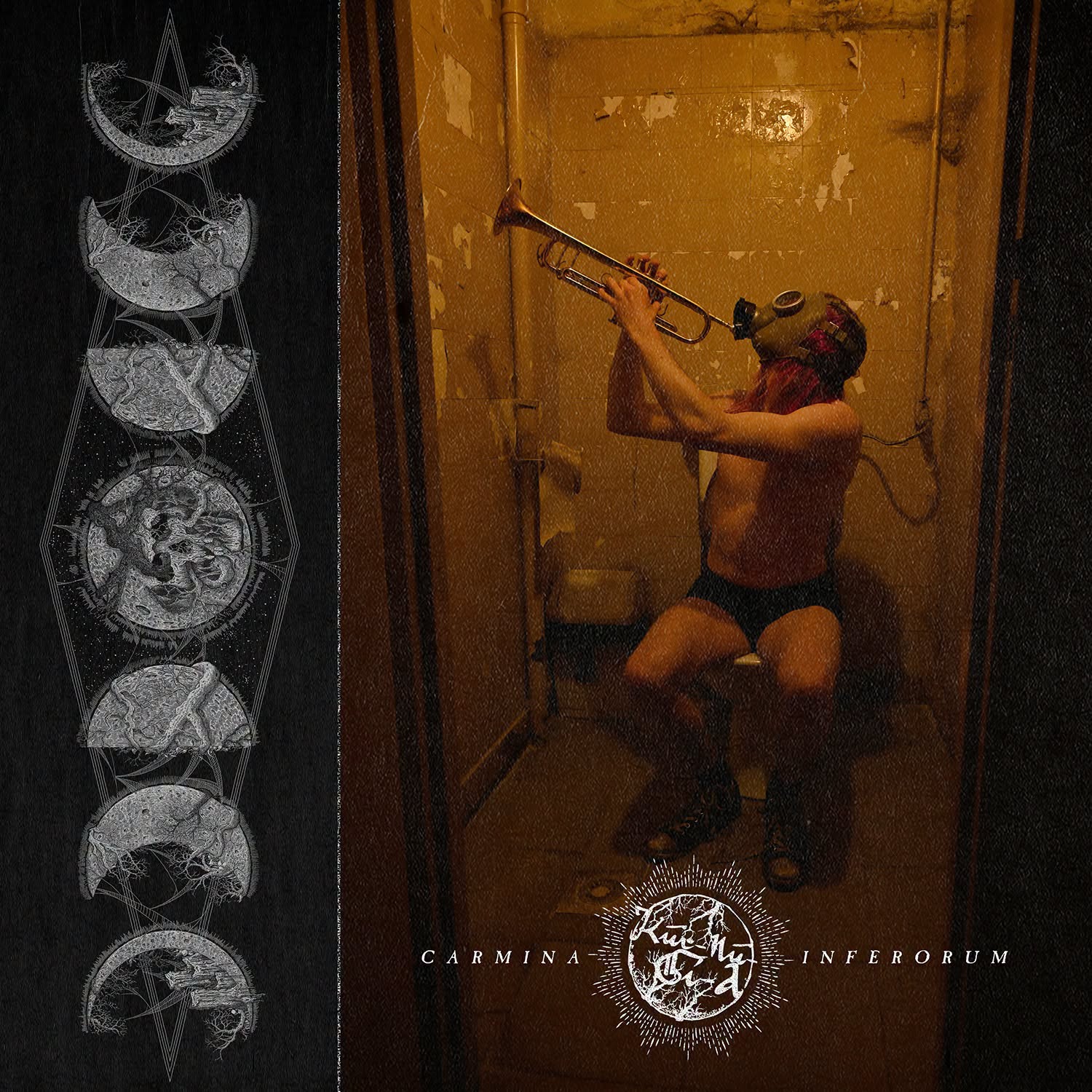
Przez długi czas recenzja tego materiału zamykała się w jednym zapisanym zdaniu. Męczy mnie ta płyta niezmiernie. Na potrzeby kronikarskie określę Kur•Nu•Gi•A Avantgarde Black / Death Metalem. Projekt to na pewno przemyślany. Z konkretnym kośćcem. Nazwa, liryki (czego tu nie ma, w sumie bigosu niet) i muzyka. Ta ostatnia pływa, chociaż bardziej adekwatnym określeniem będzie przelewa się przez słuchawki fundując nam antynomię. Ta dwubiegunowość budzi w słuchaczu – w fazie początkowej kontaktu z materiałem – uczucie dyskomfortu, muzyka jest na kursie kolizyjnym ze standardowym pojmowaniem gatunków wcześniej wymienionych.
Natomiast, jeśli pojęcie awangarda nie jest Wam obce, materiał staje się bardziej przystępny. W recenzjach pojawiają się takie zespoły jak Pan.Thy.Monium, Khthoniik Cerviiks czy Oranssi Pazuzu. Przede wszystkim mam wrażenie ze względu na próbę – mniej czy bardziej udaną nie mnie wyrokować – osadzenia Kur•Nu•Gi•A w ramach, które są znane, bezpieczne. Pierwszy z wymienionych zespołów pojawia się też w wywiadzie dla Transcening the Mundane. Zresztą w nim również wybrzmiewa również pewnego rodzaju znudzenie(?) wspomnianymi schematami dla Black i Death Metalu. I nie da się ukryć, że zespół stara się z nimi odważnie walczyć.
„Ty, ale weź napisz, że trąbkę mają i to robi”. No tak mają. Czasem robi („Snake is Blind”). „A i że jazzują”. A no tak robią. Na przekór łamańcom, kontrastom i innym „om” postaram się wskazać najbardziej przebojowe utwory tego materiału. Są to lovecraftowa (nie tylko w treści) spuścizna w postaci „IA! IA! IA!” i kawałek „Divida et Impera”. Tak sobie teraz pomyślałem, Panowie, jeśli chcecie wejść w awangardę na pełnej (przy okazji wywołać pot, drżenie rąk i jąkanie u recenzentów), zinstrumentalizujcie „Zniknięcia” Pereca, albo lepiej jego „Les revenentes”. A już w ogóle pokosicie głowy, jak weźmiecie na tapetę cały ruch OuLiPo.
Dlaczego więc napisałem, że mnie ten materiał męczy? Bo to nie mój typ eksperymentów i poszukiwania muzyki, której nawet RYM w swojej ciągłej pogoni do zgubnej i groteskowej elitarności, omija szerokim łukiem. I w sumie to paradoks. Bo męczy – w innym przypadku, pewnie bym po prostu odbębnił co mam zrobić i olał – a jednak włączam sobie „Carmina Inferorum” z jakimś dziwnym niezrozumiałym dla mnie rodzajem przyjemności.
Ocena: 7/10
This material popped up on our secretive group Chaosvault, and no one seemed particularly interested in picking it up. The music video for „IA! IA! IA!” tempted me, and I haven’t written anything in a while. These two simple steps led me to an album that—I have a feeling—won’t make a huge splash in the music world. Even though it should.
For a long time, my review of this material was limited to a single written sentence. This album is exhausting me. For the sake of chronicling, I’ll call Kur•Nu•Gi•A Avantgarde Black/Death Metal. It’s definitely a well-thought-out project. With a solid backbone. The name, the lyrics (what’s missing here, there’s no real bigotry), and the music. The latter flows, although a more accurate description would be „pouring through the headphones,” presenting us with an antinomy. This bipolarity evokes a feeling of discomfort in the listener during the initial phase of contact with the material; the music is on a collision course with the standard understanding of the genres mentioned above.
However, if you’re familiar with the concept of avant-garde, the material becomes more accessible. Bands like Pan.Thy.Monium, Khthoniik Cerviiks, and Oranssi Pazuzu appear in reviews. I’m primarily impressed by the attempt—more or less successful, it’s not up to me to judge—to place Kur•Nu•Gi•A within a familiar, safe framework. The first of these bands also appears in an interview for Transcending the Mundane. Incidentally, there’s also a certain boredom(?) with the aforementioned black and death metal clichés. And there’s no denying that the band is boldly trying to challenge them.
„You, but write that they have a trumpet and they’re doing it.” Well, they do. Sometimes they do („Snake is Blind”). „And they’re jazzy.” Well, they are. Despite the twists, contrasts, and other „ohs,” I’ll try to point out the most catchy songs on this material. These are the Lovecraftian legacy (not just in content) in the form of „IA! IA! IA!” and the track „Divida et Impera.” Now I’m thinking, gentlemen, if you want to go full-on avant-garde (and also make reviewers sweat, shake, and stammer), instrument Perec’s „Znicenia” (Disappearances), or better yet, his „Les revenentes.” You’ll definitely be in trouble if you tackle the entire OuLiPo movement.
So why did I write that this material is tiring for me? Because it’s not my type of experimentation and musical exploration, which even RYM, in its constant pursuit of pernicious and grotesque elitism, steers clear of. And that’s a paradox, really. Because it’s tiring—otherwise, I’d probably just rattle off what I have to do and ignore it—and yet I find myself putting on „Carmina Inferorum” with some strange, incomprehensible kind of pleasure.